
How to Choose a Silicone Baby Products Manufacturer for Your Brand
A reliable silicone baby products manufacturer helps baby brands turn product ideas into safe, manufacturable and market-ready silicone baby products.
Choosing the right manufacturing partner is one of the most important decisions for a baby brand.
A good manufacturer does more than produce a product. The right factory helps you review product structure, check material options, develop molds, prepare samples, support testing requirements, design packaging and move the project into stable mass production.
For baby products, small details matter. A feeding product, teether, pacifier or baby care accessory is not only about appearance. It must be safe, functional, practical for parents and suitable for production.
This guide explains what baby brands, importers, distributors and e-commerce sellers should check before choosing a silicone baby products manufacturer.
What Is a Silicone Baby Products Manufacturer?
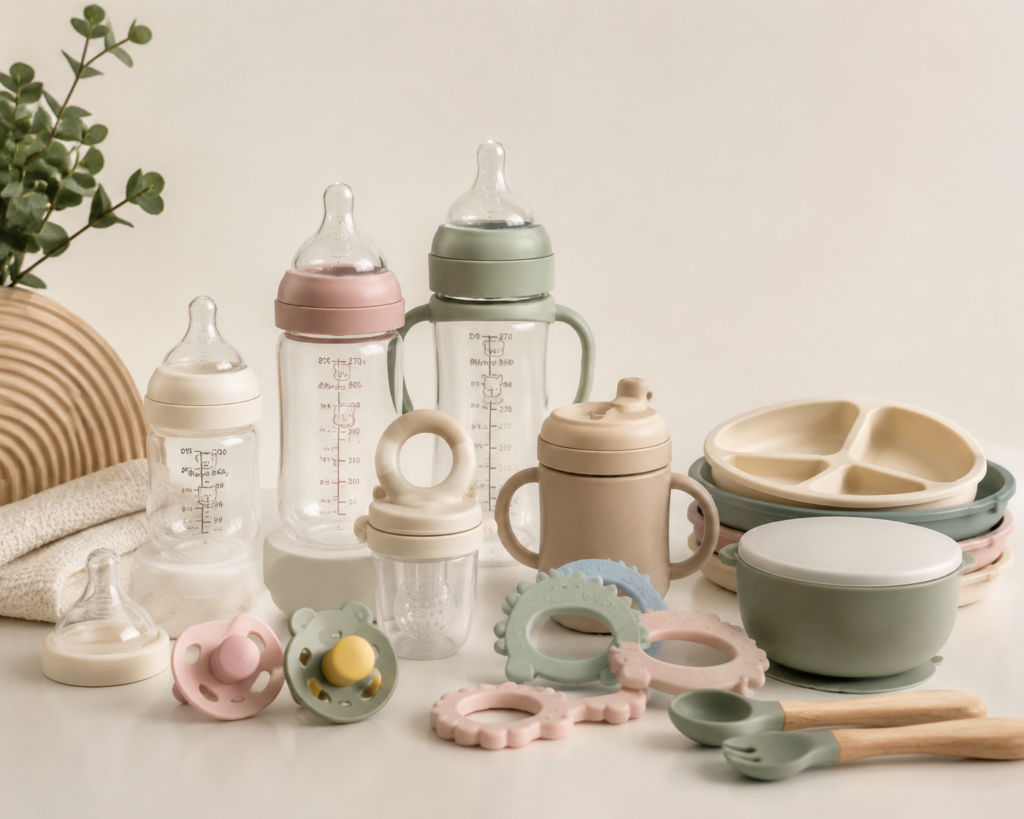
A silicone baby products manufacturer develops and produces silicone items such as baby bottles, nipples, teethers, pacifiers, fruit feeders, feeding sets and baby care accessories for brands, importers and e-commerce sellers.
1. Choose a Real OEM/ODM Manufacturer, Not Only a Product Supplier
Many suppliers can sell ready-made silicone baby products. But if your brand wants custom colors, a new product structure, private label packaging or a new mold, you need more than a trading supplier.
You need an OEM/ODM manufacturer that can support product development from idea to production.
A reliable silicone baby products manufacturer should be able to help with:
- Product idea review
- Product structure suggestions
- 3D sampling
- Mold development
- Color customization
- Logo customization
- Private label packaging
- Testing support
- Bulk production
If a supplier can only send existing product catalogs and prices, they may not be suitable for a custom baby product project.
For brand development, the manufacturer should understand both product function and production feasibility.
2. Check Their Experience With Silicone Baby Products
Silicone baby products are different from general silicone household items.
Baby products usually have higher requirements for material safety, product structure, softness, bite resistance, easy cleaning, packaging and testing.
Before choosing a manufacturer, check whether they have experience with products such as:
- Silicone baby bottles
- Silicone nipples
- Silicone teethers
- Pacifiers
- Fruit feeders
- Baby feeding sets
- Silicone bibs
- Baby cups
- Milk powder containers
- Pacifier clips and baby care accessories
A factory that understands baby products will be more careful when reviewing details such as product edges, thickness, hardness, suction function, grip design, cleaning structure and packaging safety.
For baby brands, manufacturing experience in the baby product category is more important than a general claim of being a silicone factory.
3. Review Their Mold Development Ability
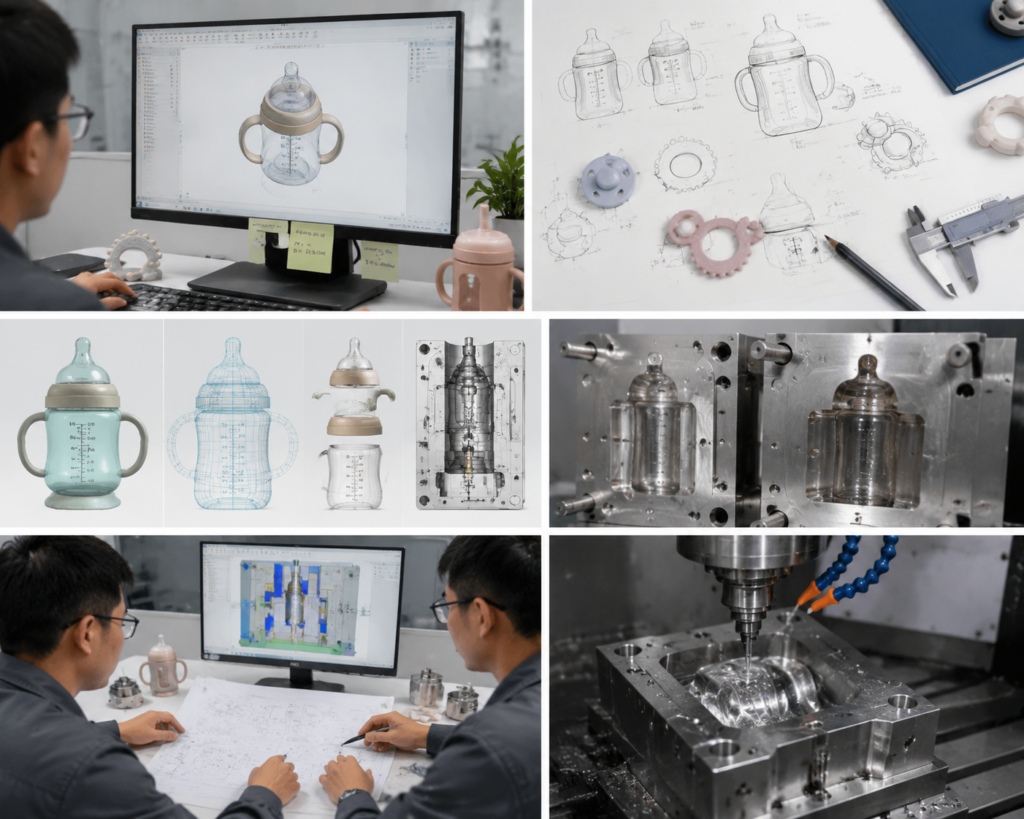
For custom silicone baby products, mold development is often the key step.
A product idea may look simple in a sketch, but the mold structure decides whether it can be produced smoothly. A good manufacturer should help you check whether the product design is suitable for molding, trimming, assembly and long-term production.
Before starting a custom project, ask the manufacturer:
- Can you review product structure before opening the mold?
- Can you support 3D sampling or prototype review?
- Can you suggest improvements for manufacturing feasibility?
- Can you develop custom molds for baby products?
- Can you help avoid weak structures, sharp edges or difficult production points?
Good mold development can save time, reduce production risks and help the product move faster from idea to market.
4. Check Material Selection and Safety Testing Support
| Product Type | Possible Testing Support |
| Baby feeding products | Food-contact material testing, EN14350 support |
| Silicone teethers | CPC, EN71 or market-specific testing support |
| Pacifiers | Product safety and material testing support |
| Pacifier clips | EN12586 testing support |
| Silicone bibs and feeding sets | Food-contact material testing support |
Common Testing Support for Silicone Baby ProductsMaterial safety is one of the most important parts of silicone baby product manufacturing.
Baby brands should ask what type of silicone material the factory uses and whether testing support can be arranged based on the product type and target market.
Different baby products may require different testing requirements. For example:
- Food-contact material testing may be required for feeding products.
- CPC may be required for children’s products sold in the United States.
- EN71 may be related to toy-type baby products.
- EN14350 may be relevant for baby feeding products and bottles.
- EN12586 may apply to pacifier clips and soother holders.
Not every baby product needs the same test. A reliable manufacturer should not simply say that every product has all certifications. A more professional answer is that testing support can be arranged based on product design, material, function and target market.
This is an important sign of whether the manufacturer understands real B2B baby product development.
5. Evaluate Customization Options
For baby brands, customization is often more than changing a color.
A strong silicone baby products manufacturer should be able to support different levels of customization, including:
- Pantone color matching
- Product shape customization
- Logo customization
- Product structure adjustment
- Mold development
- Product set combination
- Private label packaging
- Custom box structure
- Instruction card or insert support
- Retail-ready packaging preparation
If you are building a baby brand, packaging and product presentation are also part of the product experience.
A manufacturer that can support both product development and packaging development will make the project easier to manage.
6. Understand MOQ, Sampling and Lead Time
Before choosing a manufacturer, always confirm the basic project conditions.
Important questions include:
- What is the MOQ for stock items?
- What is the MOQ for custom OEM products?
- How long does 3D sampling take?
- How long does mold sampling take?
- What is the normal mass production lead time?
- Does the lead time change depending on product complexity?
- Can the factory support packaging development at the same time?
For example, stock items may have a lower MOQ, while custom mold products usually require a higher MOQ because mold development, material preparation and production planning are involved.
A professional manufacturer should explain these differences clearly before the project starts.
7. Check Quality Control and Production Stability
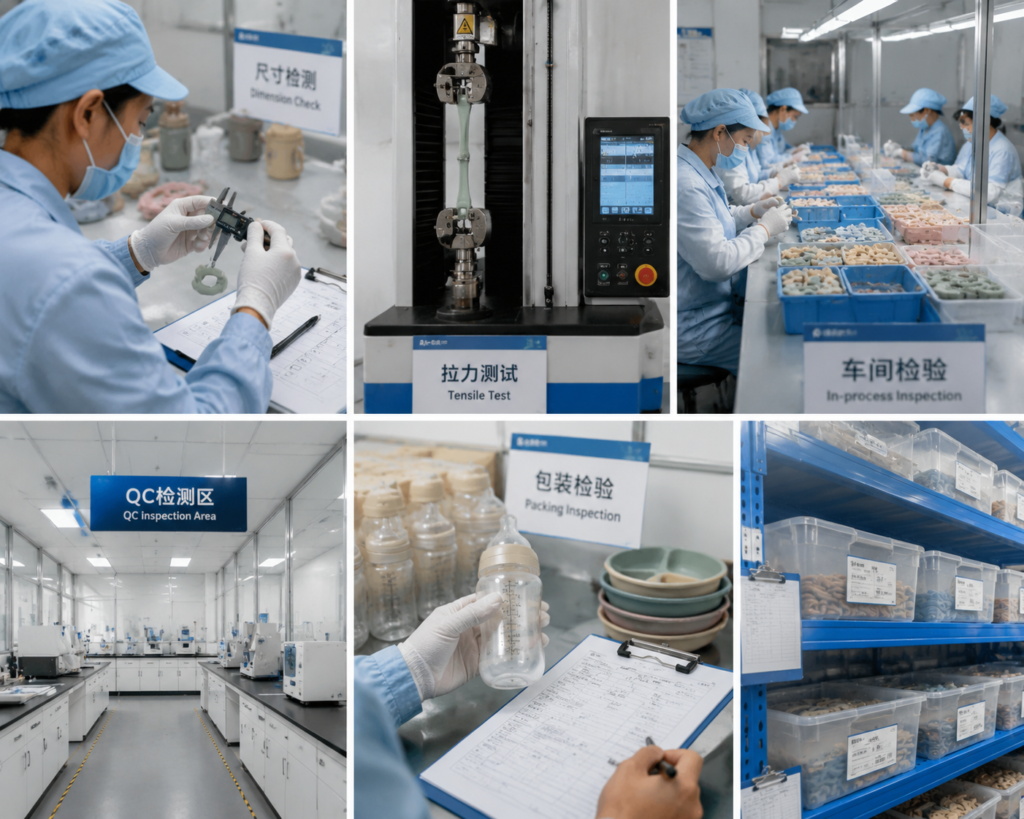
You can also review our silicone manufacturing capability to better understand our production process, equipment and quality control support.
For baby products, quality control is not optional.
A reliable silicone baby products manufacturer should have clear inspection processes for materials, molding, trimming, assembly, packaging and final shipment.
When reviewing a factory, check whether they can explain:
- How raw materials are controlled
- How molding quality is checked
- How defective products are removed
- How samples are confirmed before bulk production
- How packaging is inspected
- How production consistency is maintained
Stable production is especially important when your brand needs repeat orders or long-term product lines.
A lower unit price is not useful if the factory cannot maintain stable product quality.
8. Look for Real Project Communication, Not Only Catalog Selling
A good OEM/ODM manufacturer should ask questions before giving a final solution.
For example, they may ask:
- What is your target market?
- Is this a stock product or a custom mold project?
- Do you need private label packaging?
- What age group is the product designed for?
- Do you already have drawings or reference samples?
- Do you need testing support?
- What is your expected launch timeline?
These questions are not delays. They help the factory understand the project and reduce mistakes.
If a supplier only pushes ready-made products without asking about your project details, they may not be the right partner for brand development.
9. Red Flags When Choosing a Silicone Baby Products Manufacturer
Be careful if a supplier:
- Cannot explain material or testing requirements clearly
- Claims every product has all certifications without checking product type
- Has no mold development experience
- Cannot support packaging customization
- Gives very low prices without discussing quality requirements
- Cannot explain sampling time and production lead time
- Does not ask about your target market
- Only sells ready-made products and cannot support OEM/ODM development
For baby products, choosing the wrong manufacturer can cost more than money. It can delay your launch, create quality problems and damage your brand reputation.
10. How Baiya Silicone Supports Baby Product Brands
Dongguan Baiya Silicone Products Co., Ltd. is a silicone OEM/ODM manufacturer based in Dongguan, China.
Through our baby product division Baiya Baby, we support global baby brands, importers, distributors and e-commerce sellers with custom silicone baby product development.
Our product range includes silicone baby bottles, nipples, teethers, pacifiers, fruit feeders, baby feeding sets, silicone bibs, milk powder containers and other custom silicone baby products.
We support product structure review, 3D sampling, mold development, Pantone color matching, logo customization, private label packaging, testing support and mass production.
For baby product projects, our team helps buyers review product feasibility, MOQ, sample plan, lead time and production solution before moving into bulk manufacturing.
Final Thoughts
Choosing a silicone baby products manufacturer is not only about finding a supplier with the lowest price.
For baby brands, the right partner should understand product development, material safety, mold feasibility, testing support, packaging and stable production.
If you are developing a new silicone baby product project, send us your project requirements. Our team can help review your product idea, reference samples, drawings, packaging requirements or target market information.
Our team can help review the project and suggest a suitable sample plan, MOQ, lead time and production solution.
 English
Comments are closed